Your Shopping Cart Is A Spy — Pentagon Brands Alibaba, BYD as Military Assets
The Pentagon brands Alibaba, BYD, and Baidu as Chinese military companies, alleging your everyday tech and cars are fronts for Beijing's strategic ambitions.
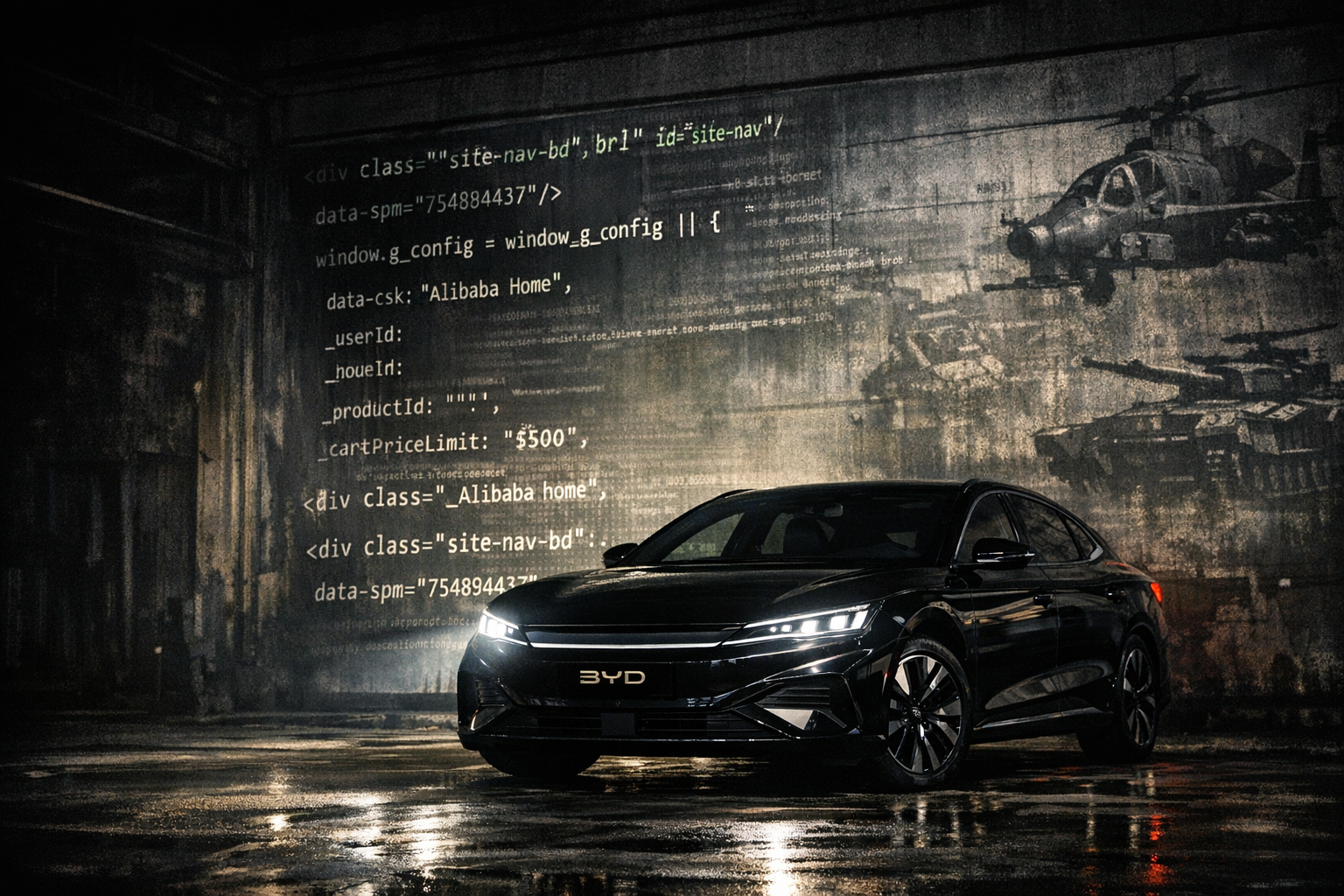
Forget Silicon Valley—the Pentagon has just unveiled its blockbuster list of who’s really feeding the beast, and the names will stop you mid-scroll. Tech titan Alibaba, the very platform where you buy your knockoff designer goods and bulk paper towels, has been officially branded an accessory to the Chinese military-industrial complex. So has electric vehicle darling BYD, the cute car you’ve seen all over TikTok. According to a bombshell update from the Department of Defense, your everyday consumer tech is allegedly just a shiny front for Beijing’s grand military-civil fusion strategy.
Insiders whisper this isn’t just about contracts; it’s a scarlet letter meant to torch reputations and freeze these giants out of the American fabric. The list has ballooned to a staggering 188 entities, a clear signal that Washington sees a Red spy in every server room and charging port. “It’s a warning to American businesses,” thundered the House Select Committee on the Chinese Communist Party, suggesting any U.S. company still in bed with these labeled firms is “enabling China’s military ascendance.” The implication? Your investment portfolio and your garage might be unwittingly funding the next geopolitical showdown.
The accused are, of course, screaming bloody murder. Alibaba issued a statement dripping with indignation, denying any role in military strategy. BYD called the move a gross distortion of facts. Baidu, the AI and search engine powerhouse also named, labeled the accusation “entirely baseless.” But the Pentagon isn’t buying the corporate innocence act. They point to deep, tangled affiliations with China’s Ministry of Industry and Information Technology—the very engine room of Beijing’s tech dominance playbook.
The scandal thickens when you consider the bizarre cameos. Also on the list? Unitree, the robotics company whose adorable, dancing bots once charmed Simon Cowell on ‘America’s Got Talent.’ Apparently, those viral sensations were, per the Pentagon, knowingly nurtured by state assistance. It’s a plot twist worthy of a spy thriller: the future is being built, one viral robot dance and cheap electric car at a time, and the Pentagon claims to have finally cracked the code. The ultimate question for consumers: Is that bargain on your screen, or that sleek EV in your driveway, the product of a corporate giant—or a geopolitical pawn?
Original article: Associated Press ▸