Musk's Spies Invade Your Phone: SpaceX Declares War
Elon Musk and SpaceX declare all-out war on T-Mobile, AT&T, and Verizon with a shocking plan to build a terrestrial cell network using Starlink dishes.
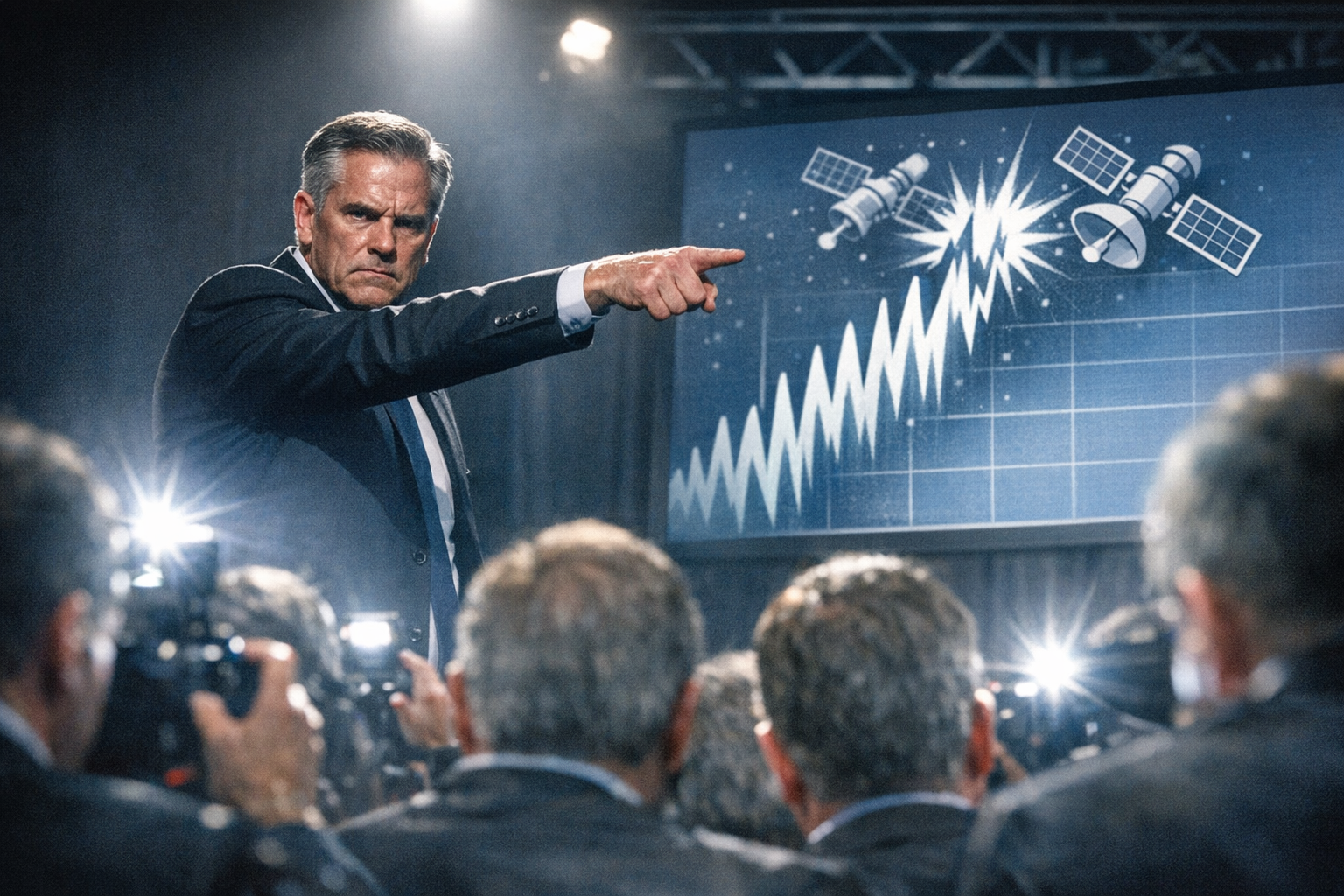
The galactic coup d’état is finally here, and your cellphone bill is the battlefield. In a shockingly brazen move that has the telecom titans sweating through their bespoke suits, SpaceX’s power duo—Elon Musk and his ferocious number two, Gwynne Shotwell—have officially declared war on T-Mobile, AT&T, and Verizon. During a fiery earnings call Q&A, the duo didn’t just hint at competition; they vowed to pillage the customer bases of the ‘Big Three’ in a brazen land grab for a slice of the $600 billion wireless pie.
‘Spectrum’ and ’terrestrial components’ might sound like boring tech jargon, but make no mistake: this is an act of corporate aggression worthy of a Bond villain. Shotwell coyly admitted SpaceX’s purchase of spectrum from EchoStar came with a terrestrial license, a detail that transforms their satellite-based Starlink Mobile from a niche rural savior into a full-blown, nationwide network insurgent. Musk, never one to whisper when he can shout, boasted that their plan involves deploying a legion of ’little femtocells’—tiny base stations piggybacking on existing Starlink dishes—to create a web of connectivity that could allegedly offer service ‘probably better and higher bandwidth’ than your current carrier. The implication? Your rooftop internet dish is about to become a double agent.
This isn’t just about better bars in the boonies. This is a direct assault on the very foundation of America’s telecom oligopoly. With a chillingly confident ‘I anticipate us to be able to acquire quite a few of their customers,’ Shotwell threw down the gauntlet. The plan is diabolically simple: use their sprawling satellite constellation and a ground army of consumer-installed dishes to bypass the need for the ‘very expensive and difficult to locate’ cell towers that have locked customers in for decades. Musk’s vision is a decentralized, user-deployed network—a guerrilla telecom strategy that could make the lumbering giants look like dinosaurs overnight.
The proposed ‘Starlink Mobile (V2)’ satellites, slated to fly next year, promise a service ‘100 times better.’ But the real threat is on the ground. Imagine a future where signing up for SpaceX internet automatically enrolls you in their mobile network, seamlessly switching between satellite and a dense mesh of neighborhood nodes. It’s a bundling nightmare for the old guard and a potential paradise for consumers tired of opaque fees and spotty coverage. The message from Hawthorne is clear: SpaceX isn’t coming to play nice. They’re coming to conquer. The question for T-Mobile, AT&T, and Verizon is no longer ‘if,’ but ‘how many’ customers they’re willing to lose to the rocket man.
Original article: The Verge ▸