Tesla's Autopilot Defense Crashes a Home—And a Life
After a Tesla crashes through a Texas home, killing a woman, the driver blames Autopilot—raising familiar questions about Tesla's tech and the deadly cost of overhyped automation.
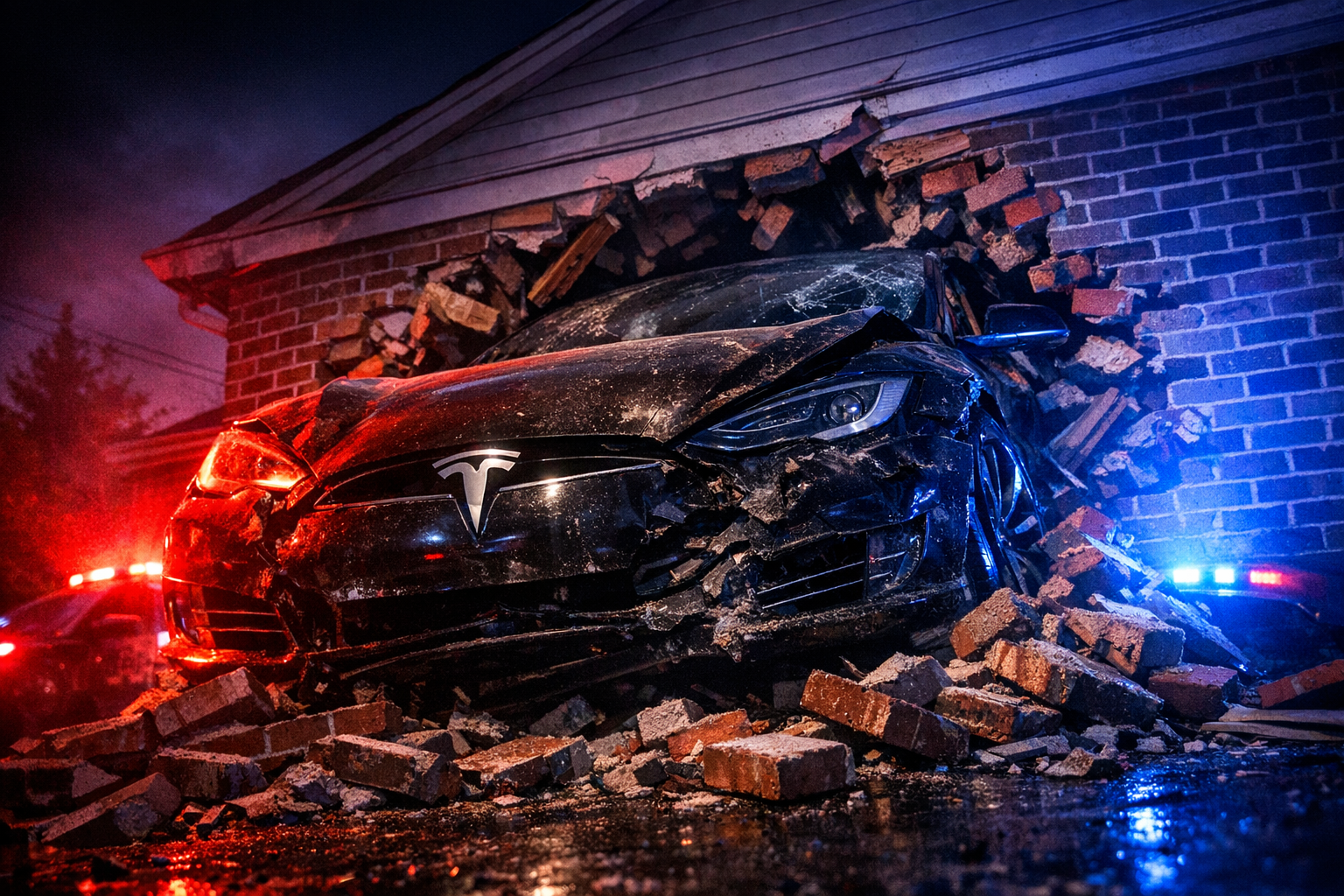
A 76-year-old woman was killed in the one place she should have been safest: her own living room. The projectile that ended her life wasn’t a stray bullet or a natural disaster, but a Tesla sedan that blasted through her brick wall in Katy, Texas. And in the grim aftermath, the driver’s immediate, ready-made defense was a chillingly familiar one: ‘The car was on Autopilot.’
This isn’t just another accident; it’s a recurring nightmare with a corporate signature. According to authorities, the 44-year-old driver claimed his Tesla was under the control of its much-hyped driver-assistance system when it failed to make a right turn, instead rocketing straight ahead ‘at a high rate of speed’ into a residential home. While investigators are still verifying his account—a critical detail in an era of convenient techno-scapegoating—the mere fact that ‘Autopilot’ is the go-to alibi speaks volumes about the dangerous mythos Tesla has cultivated.
Let’s be brutally clear: neither Autopilot nor the cynically named ‘Full Self-Driving’ makes a Tesla autonomous. They are driver-assistance systems that demand constant supervision. Yet, as federal probes mount and lawsuits pile up, the narrative sold to customers—and often believed by them—is one of superior silicon reflexes. The systems are ‘so smooth,’ critics and even former engineers admit, they lull drivers into a fatal complacency. Was the Katy driver another victim of this overtrust, conditioned by marketing to believe his car could handle a simple turn? Or is this a case of a reckless driver grasping for a high-tech excuse?
The human cost is absolute and unforgivable. A woman is dead. The technological debate, however, is murkier and dripping with corporate liability. Tesla is already under intense scrutiny from the NHTSA for issues ranging from FSD running red lights to failing to properly report crashes. An engineer even admitted the company didn’t maintain Autopilot crash records for its first three years—a staggering revelation of negligence.
This crash lands at the violent intersection of overpromise and under-delivery. If the driver’s claim holds, it’s another catastrophic failure of a system that insists it’s only a ‘co-pilot,’ while its branding screams ‘pilot.’ If he’s lying, it demonstrates how effectively ‘Autopilot’ has entered the lexicon as a get-out-of-jail-free card. Either way, Tesla’s shadow looms over the scene. The real scandal isn’t just about a car failing to turn; it’s about a company that has, for years, blurred the lines of responsibility, with bystanders now paying the ultimate price.
Original article: Electrek ▸