Brain Cancer Diagnosis Was Actually Brain-Eating Tapeworms
A man's suspected brain cancer turned out to be a parasitic infection from live tapeworm larvae lodged in his brain, a shocking case of local transmission.
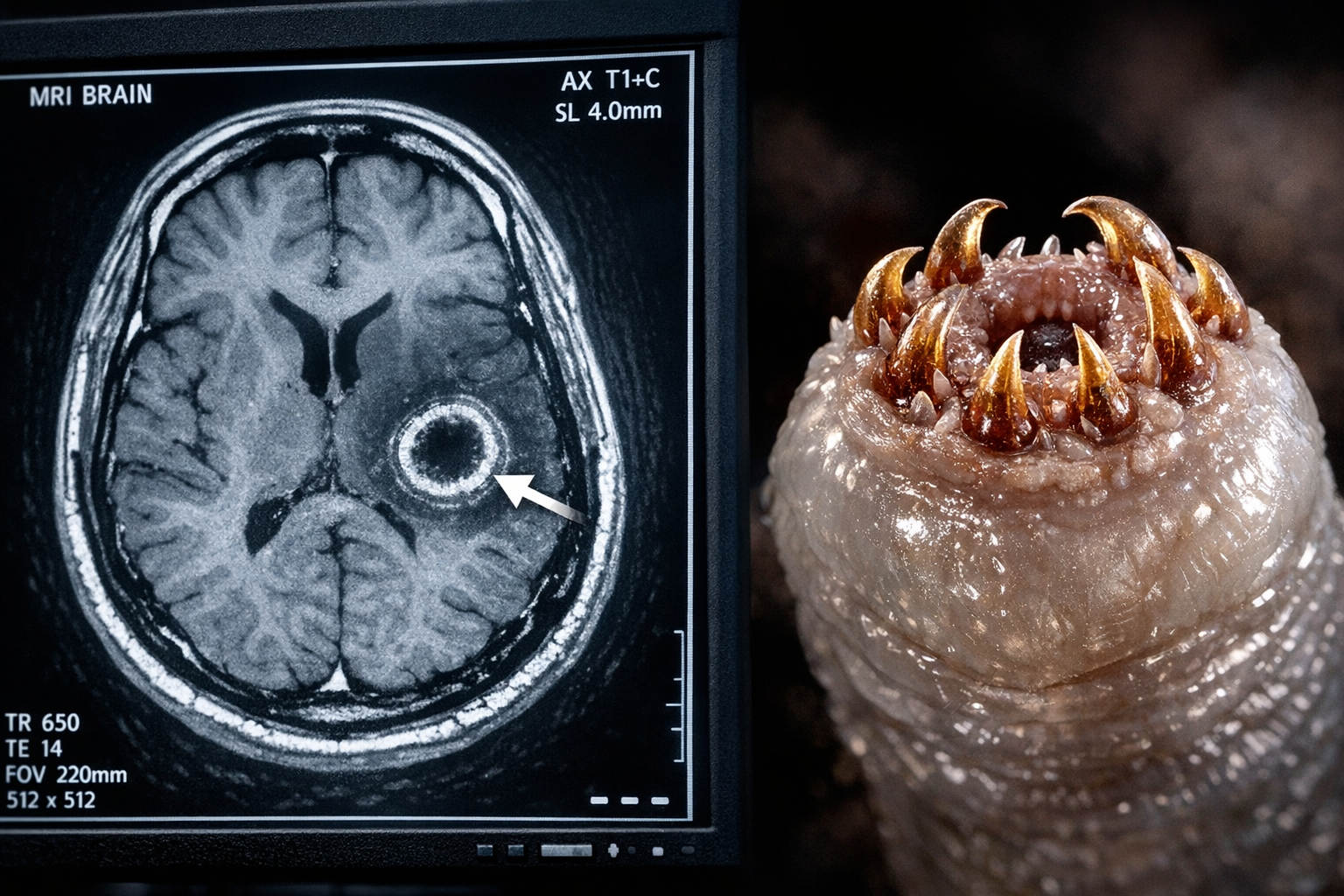
In a medical mystery that sounds ripped from a body-horror screenplay, doctors preparing for the worst discovered a spine-chilling truth wriggling inside a patient’s skull. A 60-year-old Spanish man, suffering from headaches and personality shifts, was staring down a diagnosis of terminal metastatic brain cancer. Scans showed terrifying tumors littering his brain. But the real culprit was far more grotesque: live tapeworm larvae had taken up residence, burrowing cysts deep within his nervous system.
The case, detailed in a shocking CDC report, is a parasitic nightmare come true. The man, a lifelong resident of Castellón, Spain, had never traveled to regions where such infections are common. This fact sent a chill through the medical community—it suggests the insidious pork tapeworm, Taenia solium, is lurking where it shouldn’t be. Doctors suspect he may have been exposed years ago, possibly through microscopic eggs on a construction site, a silent, invisible invasion that culminated in a brain hijacking.
Imagine the scene: advanced imaging reveals not spreading cancer, but fluid-filled cysts, some containing the distinct, hook-lined head of a tapeworm. It’s a diagnosis called neurocysticercosis, where swallowed eggs migrate through the bloodstream to form cysts in the brain, potentially causing seizures, strokes, and cognitive decay. This patient narrowly avoided invasive cancer treatments for a problem that required a completely different, antiparasitic warfare.
The treatment—a cocktail of drugs to poison the invaders and steroids to calm the inflamed brain—was a success. But the implications are widespread and deeply unsettling. This case proves that even in modern, sanitized Western Europe, ancient, gruesome parasites can bypass all our defenses. The report’s authors issued a stark warning: the absence of travel history shouldn’t rule out this ‘brain bug’ from diagnosis, even where cancer is statistically more likely.
It’s a stomach-churning reminder of the unseen world we inhabit. The tapeworm’s lifecycle is a horror story in itself: typically spread through undercooked pork or, more alarmingly, via food or water contaminated with fecal matter containing the eggs. This case of local transmission, though rare, opens up a world of paranoid possibilities. It’s the ultimate medical plot twist—a death sentence commuted to a parasitic infestation, leaving everyone wondering what else might be lurking in the shadows, or worse, in the salad.
Original article: Fox News ▸