
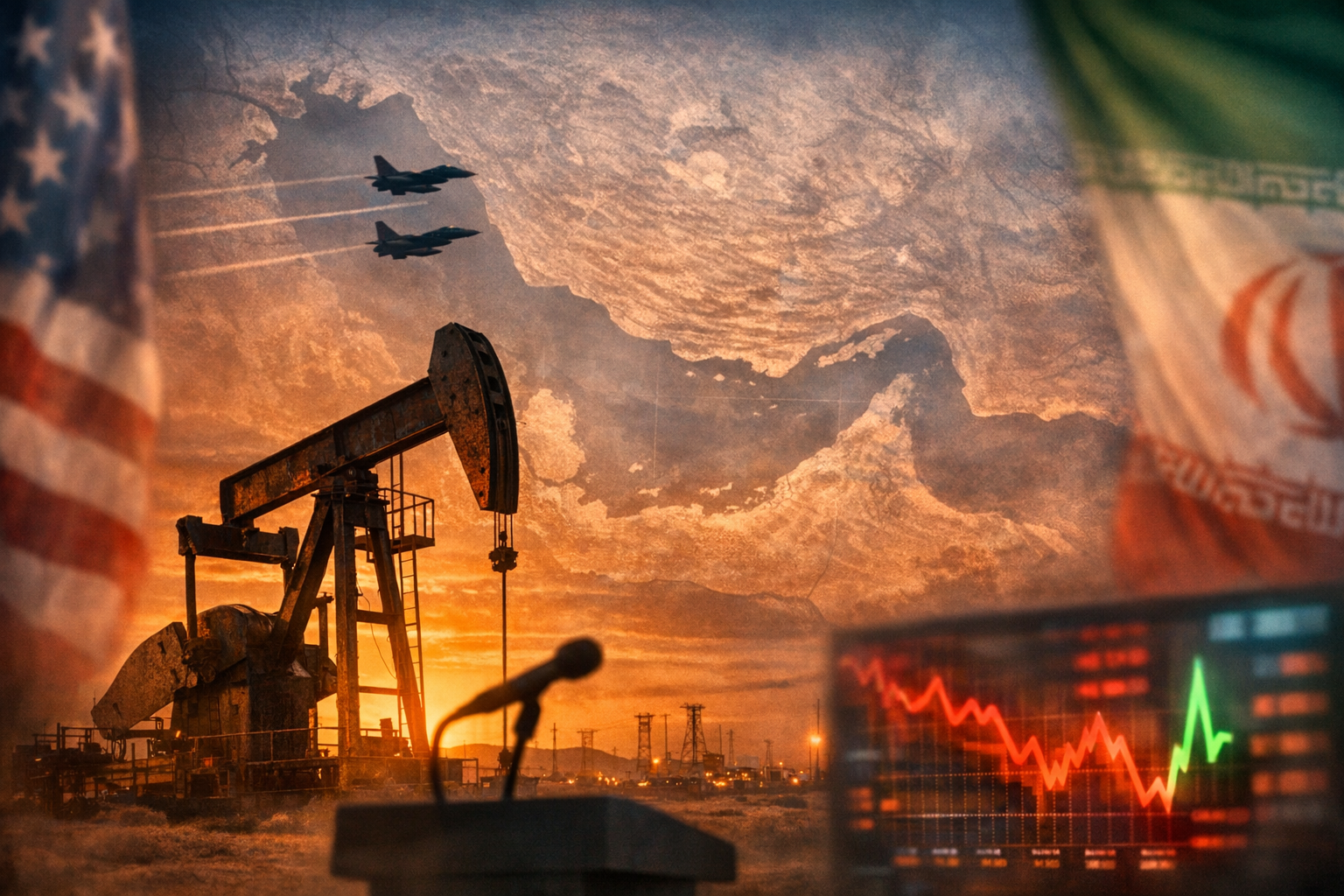
You won’t believe what Tehran and Trump just set in motion—almost back-to-back. Iran announced fresh strikes on U.S. and Israeli targets just hours before former President Donald Trump’s primetime address, and the fallout rippled from the Persian Gulf straight onto Wall Street. Buckle up: this geopolitical cliffhanger is moving fast, and the money markets are absolutely feeling it.
In his national address, Trump amped up the pressure, threatening to pull the U.S. out of NATO while vowing to hit Iran “extremely hard” over the next two to three weeks if no deal emerges. Translation: no clean end date, just more escalation risks. Futures flinched accordingly—Dow futures slipped just under 1% and S&P 500 futures dropped around 1.1% post-speech, while Asia caught the jitters too: Japan’s Nikkei 225 fell roughly 1.9% and Hong Kong’s Hang Seng slid about 0.9%. Meanwhile, oil did a full-on dramatic hair flip upward: West Texas Intermediate jumped from about $98 a barrel before the speech to nearly $104 after, and Brent popped from just under $100 to almost $106.
The president’s message was equal parts chest-thumping and cliffhanger. He said the U.S. was ready to intensify strikes in the coming weeks and floated targeting Iran’s power infrastructure and oil sector if talks fail—signaling a major squeeze on Tehran’s economic lifelines. He also urged countries dependent on Middle Eastern crude to take lead on reopening the Strait of Hormuz, the tight 21-mile chokepoint that usually handles about a fifth of the world’s oil flows—suggesting they buy U.S. oil in the meantime. If you heard that and thought, “Wait, what’s the U.S. plan to reopen the strait?”—you weren’t alone. He didn’t lay one out.
Adding to the high drama, Trump said the operation’s core goals were nearly met, pointing to damage to Iran’s missiles, drones, and navy. He also claimed Iran was edging toward a nuclear weapon—though, crucially, the U.S. intelligence community assessed last year that Iran did not have an active nuclear weapons program. The mixed signals—tough talk, no firm timeline, and a fresh round of Iranian strikes—left investors and allies scanning for clarity and bracing for aftershocks.
Bottom line: Iran’s new attacks and Trump’s escalatory posture, plus the tantalizing (and destabilizing) talk of a NATO exit, have markets clutching their pearls. Oil is rallying, equities are wobbly, and the Strait of Hormuz has never looked more like the world economy’s most dramatic bottleneck. Keep your eyes on the crude charts and your alerts on—this saga’s next act is already warming up.