Cosmic Cold Shoulder—Why Uranus and Neptune Get No Love
Uranus and Neptune remain virtually unexplored since Voyager 2's 1980s flybys, leaving their magnetic fields, moons, and interiors shrouded in mystery.
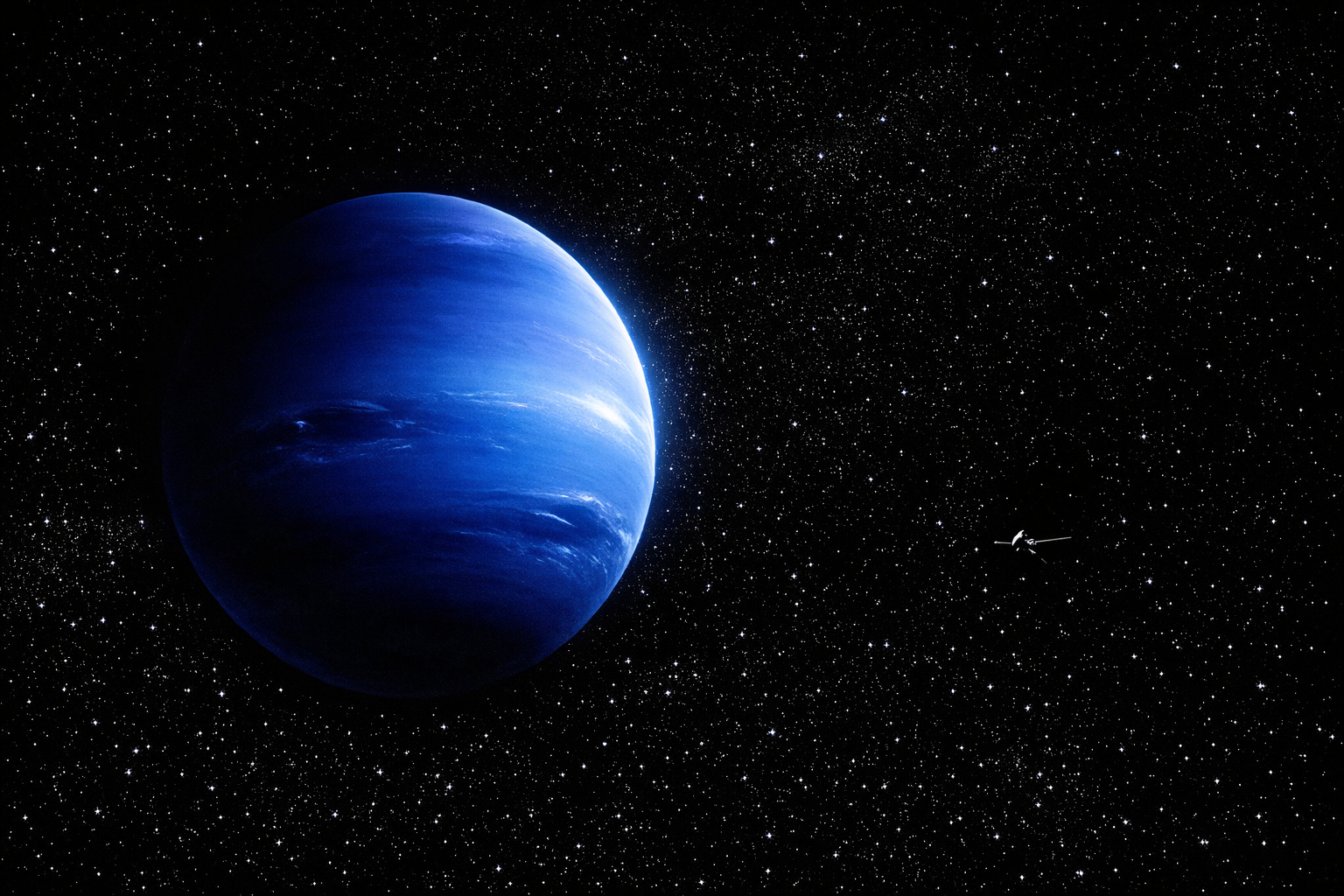
It’s the most scandalous snub in the solar system. For nearly four decades, two of our most mysterious, ice-giant neighbors have been left twisting in the vacuum of space, ghosted by the very space agencies sworn to explore them. While Mars gets rovers, Jupiter gets orbiters, and even distant Pluto got a flyby, Uranus and Neptune remain the wallflowers of planetary science, their secrets frozen in time since a single, fleeting date in the 1980s.
NASA’s Voyager 2 was a planetary playboy. It swooped in, snapped some provocative photos of Uranus in ’86 and Neptune in ’89, revealed their hidden rings and bizarre magnetic fields, and then… vanished into the interstellar void without a second glance. It was a cosmic hit-and-run, leaving scientists with more tantalizing questions than answers. What’s really churning beneath those cerulean and azure façades? Are their moons hiding secret oceans? And why is Uranus, that peculiar tipped-over world, so suspiciously cold and quiet compared to its stormy sibling Neptune?
Insiders whisper that this isn’t just neglect—it’s a full-blown scientific scandal. The data we have is thinner than Saturn’s rings, all based on a flyby that lasted mere hours. We’ve mapped less of these worlds than a tourist maps of a Vegas weekend. Their strange, off-kilter magnetic fields, which don’t play by any normal planetary rules, remain a total mystery. Could they hide dynamos of exotic, electrically conductive ‘ice’ that defy all earthly physics? The models can’t agree because the clues are too few.
And the moons! Oh, the moons. Voyager’s glimpse of Neptune’s Triton showed geysers erupting on a captured alien world, a siren song of geologic drama. Uranus’s Miranda revealed cliff faces that would shame the Grand Canyon. Yet we’ve never gone back for a closer look, leaving us to wonder if we’re ignoring potential cradles of life—or at least cosmic cataclysms—in our own backyard.
The bitter truth? We’re staring at a pair of celestial blue balls. Every exoplanet discovery in the size range of these ‘ice giants’ just rubs salt in the wound. They are the template for a whole class of alien worlds, and we’re basing our galactic understanding on a single snapshot from the Reagan era. It’s scientific malpractice wrapped in a pretty, gaseous envelope.
The clock is ticking. With each passing year, the window for a new mission slips further into the future, leaving generations of astronomers to squint through telescopes, trying to decipher secrets that only a spacecraft’s embrace could reveal. The solar system’s most enigmatic planets are giving us the silent treatment, and frankly, we deserve it.
Original article: Space Daily ▸