★ Satire Sat, Jul 4, 2026 Instagram Tip Line
No. 369
Daily Gossip
Too Juicy to Ignore
All the hot gossip from around the world. All true!
Salacious News
Advertisement
science · Exclusive

Scientists Create Breeding Synthetic Cells, Sparking DNA Panic

Researchers create synthetic cells that grow, divide, and show evolution, raising major ethical and safety concerns about artificial life.
Scientists Create Breeding Synthetic Cells, Sparking DNA Panic
Photo illustration · Salacious News

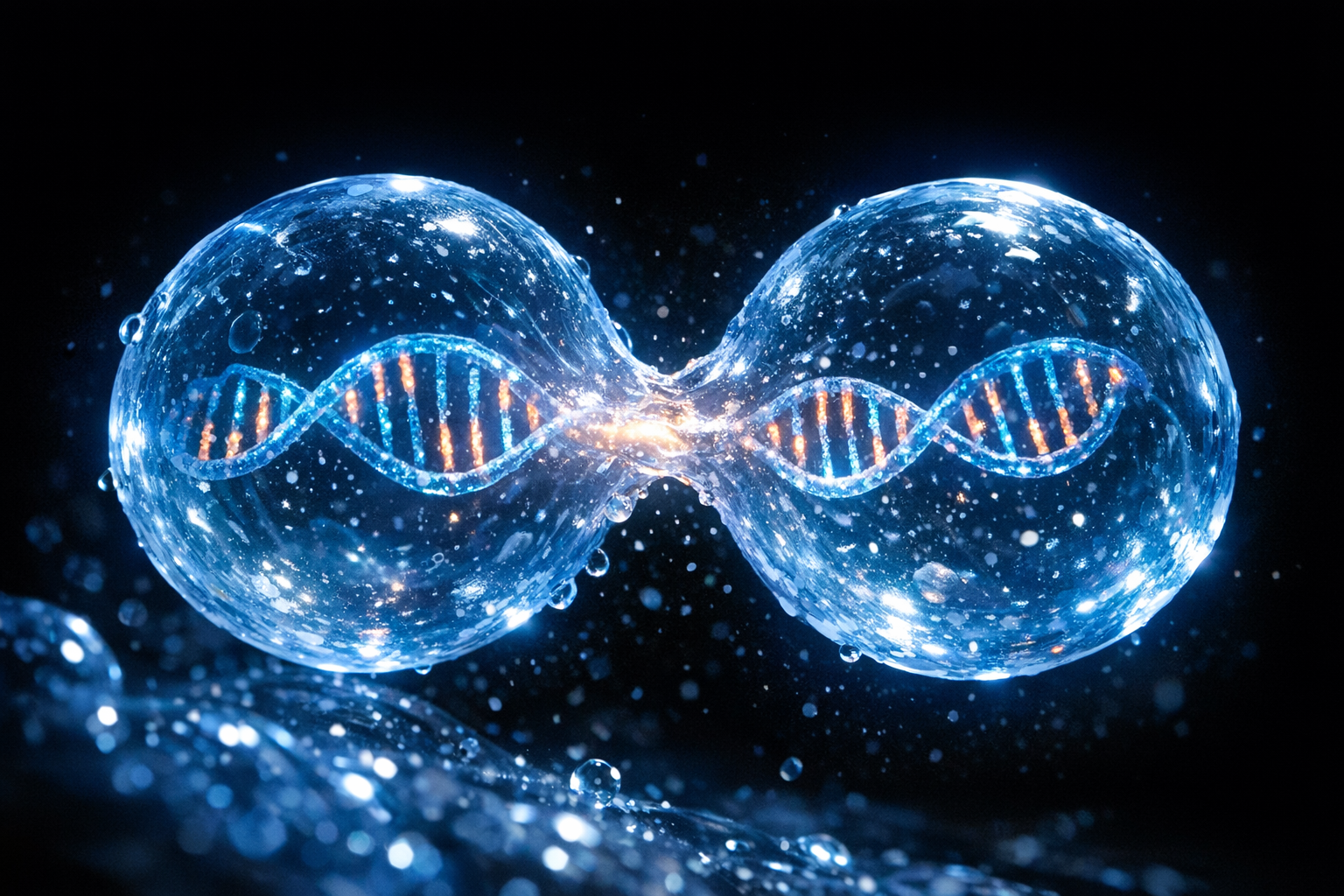
The gods of the lab coat have done it. In a move that blurs the line between groundbreaking and god-complex, a team of scientists at the University of Minnesota claims to have built a synthetic cell so lifelike it can grow, replicate, and even evolve—all from a petri dish of non-living soup. Dubbed the ‘SpudCell,’ this Frankensteinian marvel boasts a 90,000-base-pair genome and can churn out proteins, copy its own DNA, and split into daughter cells. But here’s the kicker that has ethicists reaching for the emergency button: researchers introduced a mutation that made some cells grow faster, and lo and behold, after a few generations, the speed demons took over. That’s right, they’ve created a system that demonstrates natural selection in a test tube.

Advertisement

This ‘milestone’ is being hailed as a colossal leap toward the sci-fi dream—or nightmare—of artificial life. The team proudly declares it “the first minimal cell with a cell cycle” and a major step toward “fully artificial organisms.” Imagine a future where bespoke life forms clean our oil spills or produce our medicines. Now imagine a future where they escape the lab. The researchers themselves admit this progress “highlights the urgent need to develop a safety and security framework,” a statement that reads more like a warning label on a Pandora’s Box.

Before you picture a gelatinous blob overtaking your refrigerator, know this: SpudCell is a profoundly fragile creation. It can’t survive outside its meticulously controlled lab womb, relies on stolen ribosomes from E. coli bacteria, and only about 30% of its offspring inherit the full synthetic genome. It’s less a thriving new life form and more a high-maintenance, self-replicating gadget. Yet, the principle is what’s terrifying. They’ve proven that the core engines of life—growth, division, evolution—can be assembled from scratch.

The race is now on to make these synthetic cells more robust and autonomous. The next phase? Making them regenerate their own parts and allowing mutations to arise naturally, not just be programmed in. This is the moment where science fiction becomes science homework. As these cells inch closer to self-sufficiency, the questions grow louder: Who controls this technology? What are the biosecurity risks of a synthetic organism that can actually adapt? The scientists may have built a cell, but they’ve also constructed a minefield of ethical and existential dilemmas that could define our century.

Original article: Fox News ▸
Around the Web

Sponsored Links · powered by ad network

More in science

Advertisement
science · Exclusive

Scientists Create Breeding Synthetic Cells, Sparking DNA Panic

Researchers create synthetic cells that grow, divide, and show evolution, raising major ethical and safety concerns about artificial life.

Scientists Create Breeding Synthetic Cells, Sparking DNA Panic

The gods of the lab coat have done it. In a move that blurs the line between groundbreaking and god-complex, a team of scientists at the University of Minnesota claims to have built a synthetic cell so lifelike it can grow, replicate, and even evolve—all from a petri dish of non-living soup. Dubbed the ‘SpudCell,’ this Frankensteinian marvel boasts a 90,000-base-pair genome and can churn out proteins, copy its own DNA, and split into daughter cells. But here’s the kicker that has ethicists reaching for the emergency button: researchers introduced a mutation that made some cells grow faster, and lo and behold, after a few generations, the speed demons took over. That’s right, they’ve created a system that demonstrates natural selection in a test tube.

Advertisement

This ‘milestone’ is being hailed as a colossal leap toward the sci-fi dream—or nightmare—of artificial life. The team proudly declares it “the first minimal cell with a cell cycle” and a major step toward “fully artificial organisms.” Imagine a future where bespoke life forms clean our oil spills or produce our medicines. Now imagine a future where they escape the lab. The researchers themselves admit this progress “highlights the urgent need to develop a safety and security framework,” a statement that reads more like a warning label on a Pandora’s Box.

Before you picture a gelatinous blob overtaking your refrigerator, know this: SpudCell is a profoundly fragile creation. It can’t survive outside its meticulously controlled lab womb, relies on stolen ribosomes from E. coli bacteria, and only about 30% of its offspring inherit the full synthetic genome. It’s less a thriving new life form and more a high-maintenance, self-replicating gadget. Yet, the principle is what’s terrifying. They’ve proven that the core engines of life—growth, division, evolution—can be assembled from scratch.

The race is now on to make these synthetic cells more robust and autonomous. The next phase? Making them regenerate their own parts and allowing mutations to arise naturally, not just be programmed in. This is the moment where science fiction becomes science homework. As these cells inch closer to self-sufficiency, the questions grow louder: Who controls this technology? What are the biosecurity risks of a synthetic organism that can actually adapt? The scientists may have built a cell, but they’ve also constructed a minefield of ethical and existential dilemmas that could define our century.

Original article: Fox News ▸
Around the Web

Sponsored ad network

More in science

Cosmic Cold Shoulder—Why Uranus and Neptune Get No Love
science

Cosmic Cold Shoulder—Why Uranus and Neptune Get No Love

Space DailySun, Jun 28, 2026
Mars Had Life! Rover Uncovers Shocking Fossil Evidence
science

Mars Had Life! Rover Uncovers Shocking Fossil Evidence

Live ScienceSun, Jun 28, 2026
Apocalyptic Wave of Fury! Hurricane Lee Swirls Ominously, Ready for Vindictive Revenge From Mother Nature
science

Apocalyptic Wave of Fury! Hurricane Lee Swirls Ominously, Ready for Vindictive Revenge From Mother Nature

CNNWed, Sep 6, 2023