Secret Planet Found Hiding In Our Solar System
Astronomers may have spotted the first direct infrared hint of 'Planet Nine,' a hypothetical giant world hiding in the outer solar system.
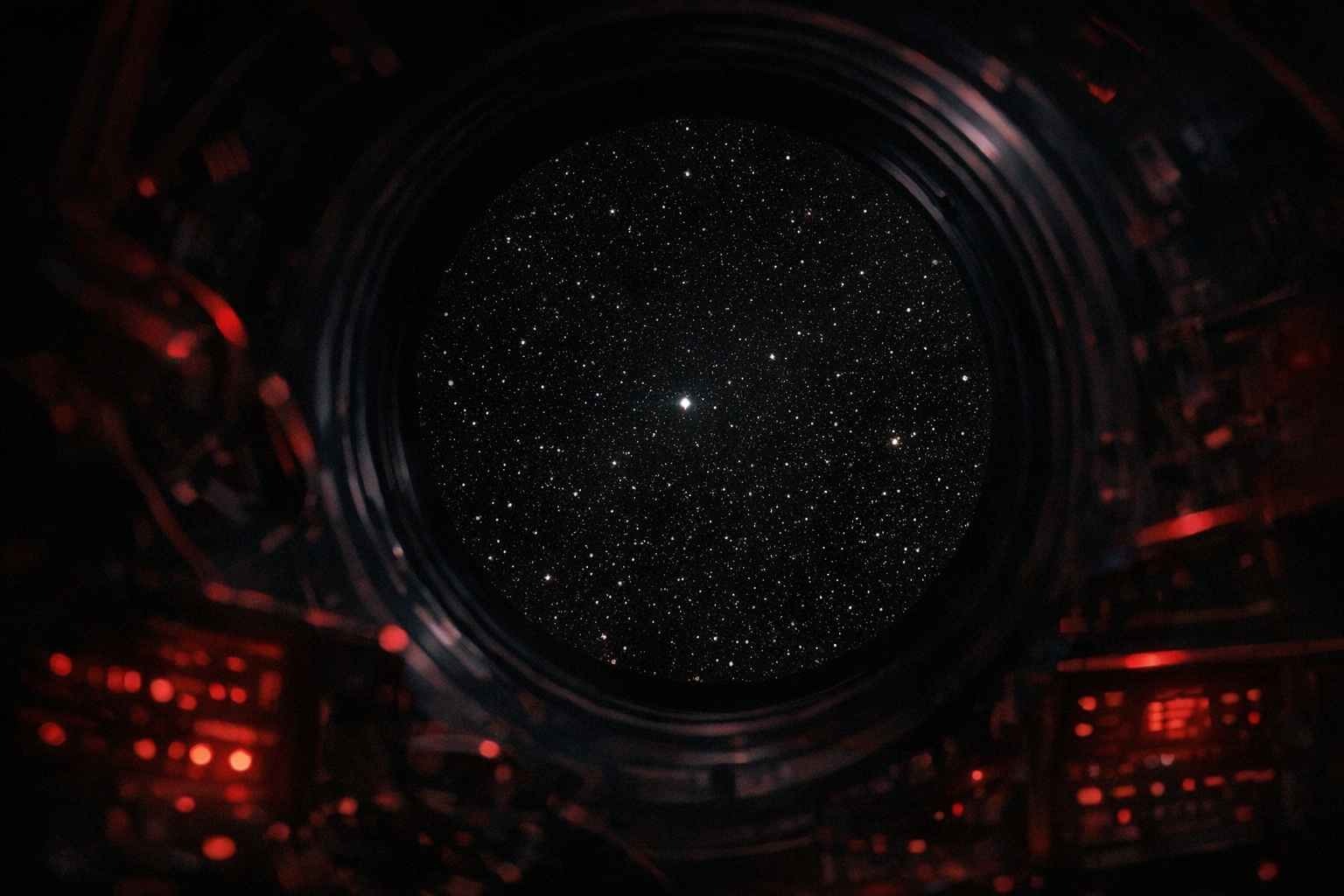
Forget Area 51. The real cosmic cover-up is right in our own backyard. Stargazers are buzzing tonight with whispers of a phantom world—a cosmic interloper dubbed ‘Planet Nine’—that may have finally been caught on an infrared snapshot after decades of playing the ultimate game of hide-and-seek.
Our sources deep within the astronomical underworld reveal that a rogue team of researchers, scouring millions of infrared data points like cosmic detectives, have pinpointed a single, tantalizing blip. This faint thermal fingerprint, shifting ever so slowly across two surveys taken 23 years apart, fits the bill for a colossal, hidden planet lurking hundreds of times farther from the Sun than Earth. Is it the gravitational puppet master astronomers have long suspected, secretly yanking distant space rocks into bizarre orbits? The evidence is heating up.
But hold the front page, space cadets! The usual suspects in lab coats are quick to downplay the drama. “We have not discovered Planet Nine,” they murmur with boring caution, citing the need for more evidence. Yet, insiders whisper this isn’t just another false lead. This is their ‘single best candidate’—a specific coordinate in the sky that has astronomers scrambling for their biggest telescopes. The implication is explosive: after years of theoretical finger-pointing at gravitational anomalies, they might finally have a face, or at least a thermal silhouette, to put to the crime.
Why the cloak-and-dagger search? Picture this: a world so distant that sunlight is a faint memory, bathing in perpetual twilight so deep it reflects almost no visible light. It’s a ghost planet, detectable only by the faint warmth it still radiates—a cosmic ember in the freezer of deep space. The search compared data from the 1983 IRAS satellite and Japan’s AKARI craft, a time lapse perfect for catching a celestial snail’s crawl across the heavens.
So, is the solar system’s family portrait incomplete? Does a massive, hidden sibling seven to seventeen times the size of Earth really skulk beyond Neptune? The astronomical elite are divided. Some call it a necessary explanation for the solar system’s oddballs; others dismiss it as overactive imagination. But with a specific target now in their crosshairs, the hunt enters a thrilling new phase. Next stop: the powerful Dark Energy Camera in Chile, ready to either confirm our solar system’s darkest secret or expose it as another magnificent mirage. The truth is out there… and it might be a lot closer than we think.
Original article: ZME Science ▸