Space Telescope Finds Unexplained Signal From Nothingness
The James Webb Space Telescope detected a mysterious infrared signal emanating from seemingly empty space, baffling astronomers who found no source object.
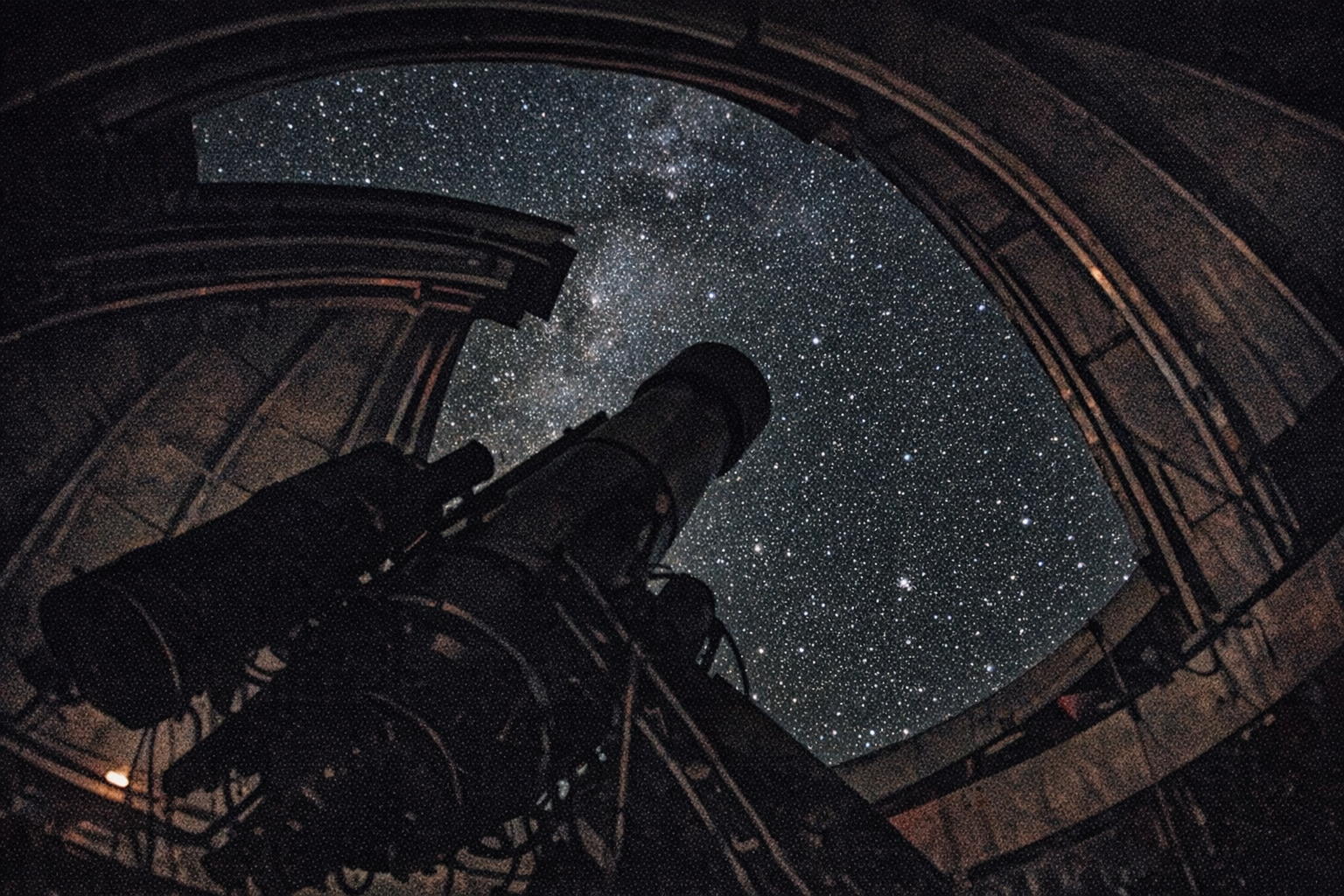
In a cosmic twist that has astronomers whispering in hushed, panicked tones, the vaunted James Webb Space Telescope has picked up a ghost in the machine—or, more accurately, a ghost in the void. Staring into the same patch of nothingness that Hubble once made famous, Webb’s golden eye caught a mysterious, solitary flash of infrared light. Not once, but twice. And the real kicker? There’s absolutely nothing there.
Imagine the scene: the most powerful observatory ever built, a $10 billion technological marvel, points at a speck of sky so thoroughly studied it’s practically astronomy’s backyard. It opens nearly all its spectroscopic shutters, a bold move to see what secrets might be hiding in plain sight. The result? Six sensible detections tied to known, distant galaxies. And then… the seventh. A single, defiant emission line blazing at 1.6 micrometers. No accompanying light, no source object in any prior image from Hubble or Webb itself. Just a spectral scream from the empty dark.
‘Highly unusual and probing extreme physical conditions,’ the researchers demur in their paper, but we read between the lines: they’re baffled. This isn’t a glitch—it appeared across two separate observation runs, months apart, at different angles. It’s real. And it was bright enough that Webb should have seen its source back in 2022. So where was it? Did it just… blink into existence?
The theories are as wild as the discovery. An ancient galaxy from the dawn of time, shouting through the neutral hydrogen fog? Problem: it should have been spotted before. A more recent galaxy? It should be singing a chorus of emission lines, not a solo. A cataclysmic supernova? Missing its telltale companion line. The most deliciously dramatic possibility? A ravenous black hole, hidden from view, violently ripping apart a star and letting loose a single, triumphant shriek of light before fading back into the shadows.
Whatever it is, it’s laughing in the face of convention. This signal is the ultimate cosmic teaser, a ‘come and find me’ dare from the universe. The researchers are now scrambling for follow-up observations, deeper and more sensitive, desperate to pin down this phantom’s redshift and finally unmask its nature. Is it a fluke? A new class of object? Or something… else? One thing’s for certain: the universe just got a lot more interesting, and a lot more mysterious.
Original article: ScienceAlert ▸